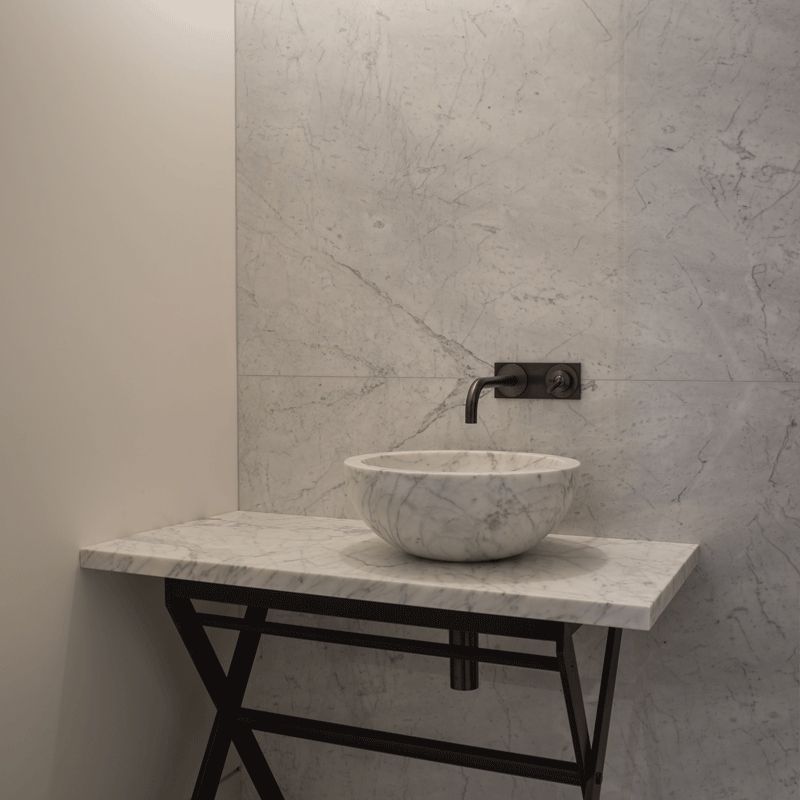
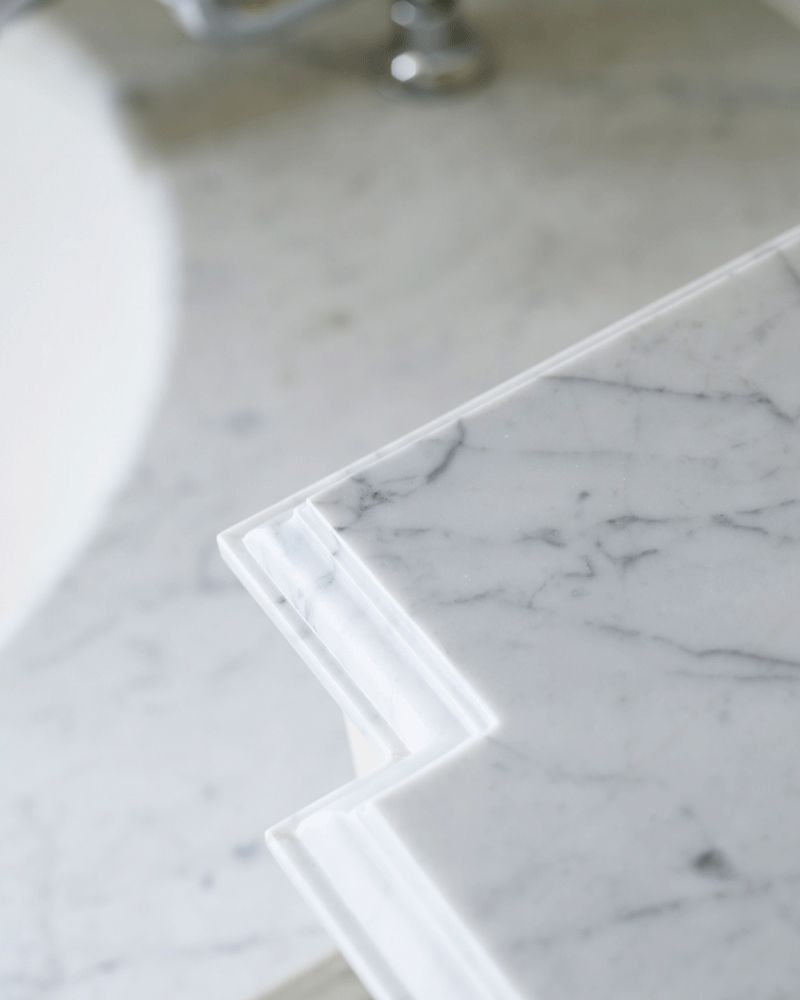
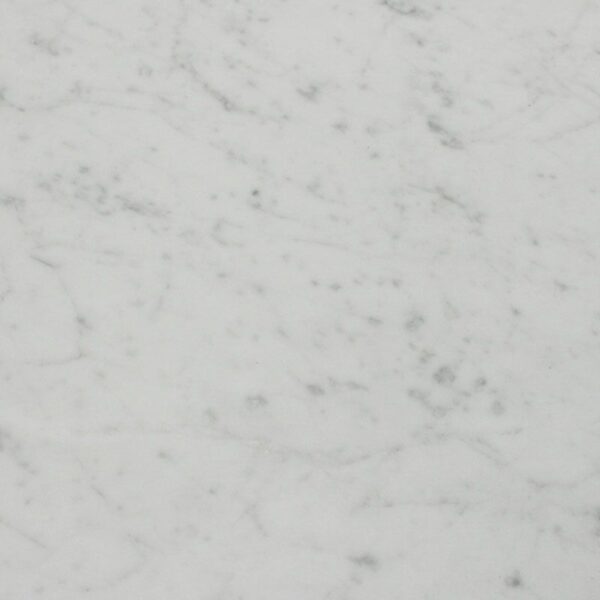


Carrara (Bianco)
In stock
Bianco Carrara is a world-renowned natural stone extracted from the Apuan Alps in the Carrara region of Tuscany, Italy. Known as the “marble par excellence,” it has been a staple in architecture and art since the Roman Empire and was notably the material of choice for Michelangelo’s sculptures
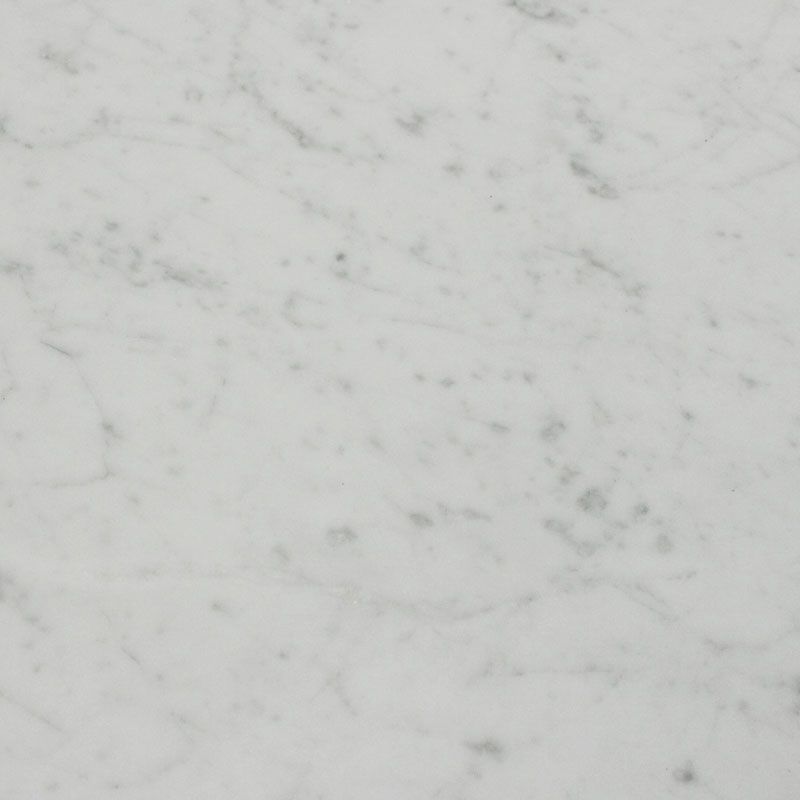
Background: Primarily a white to light grey base. The brightness of the background often determines its grade: Grade C features a lighter, purer white base, while Grade CD has a darker, greyish-pearl undertone.
- Veining: Characterized by soft, feathery grey veining that is typically thin and linear, though it can sometimes appear as “cloud-like” patches.
- Texture: It is a fine-grained, crystalline marble. Natural variations may include occasional “flies” (small black spots) or subtle rust-orange markings.
Key Characteristics
- Durability: While hard-wearing for a marble, it is relatively soft (3 to 4 on the Mohs scale) and can be susceptible to scratching or chipping.
- Porosity: It has a low water absorption coefficient (approx. 0.10–0.12%), but it is sensitive to acids like lemon juice or vinegar, which can cause “etching” (dull spots).
- Light Reflection: The high calcite content allows light to enter the surface before being reflected, giving the stone a distinctive “shining” or luminous quality.
Common Applications
Bianco Carrara is highly versatile and used in both traditional and contemporary designs.
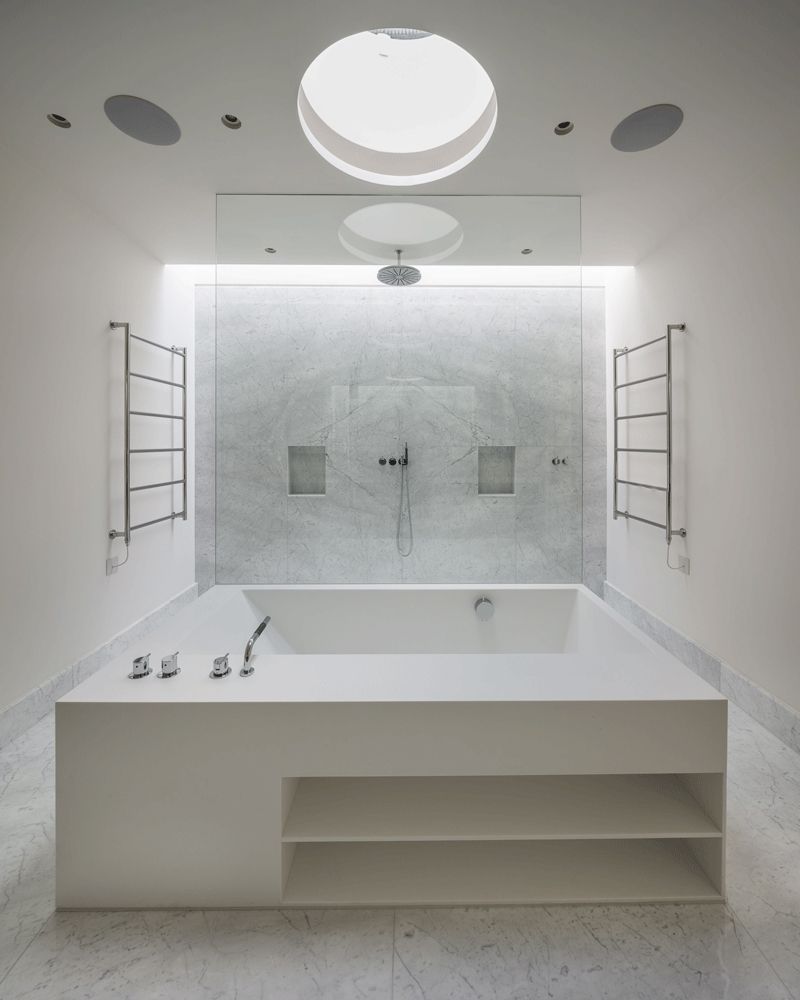
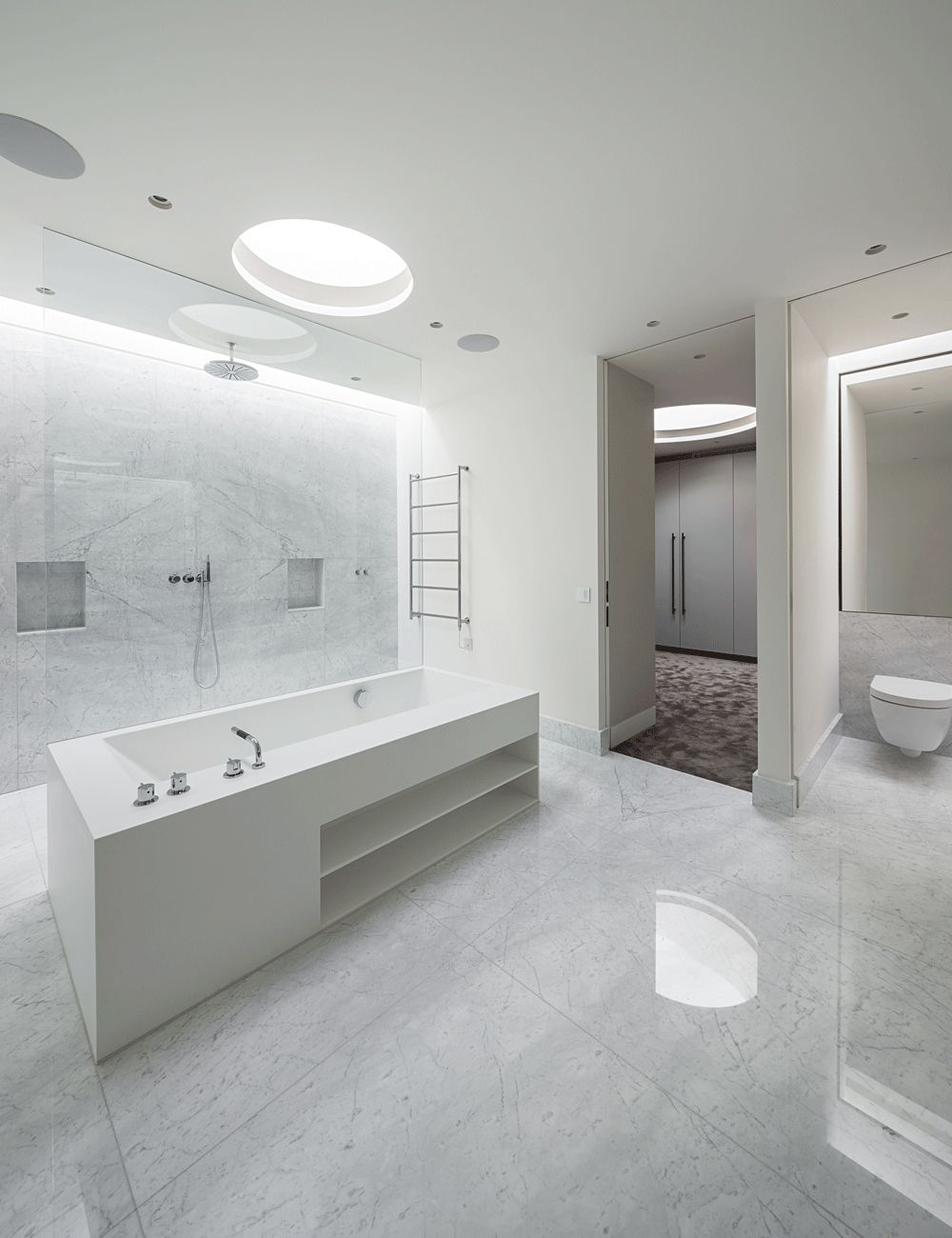
- Interior: Kitchen countertops, bathroom vanities, shower walls, flooring, and fireplace surrounds.
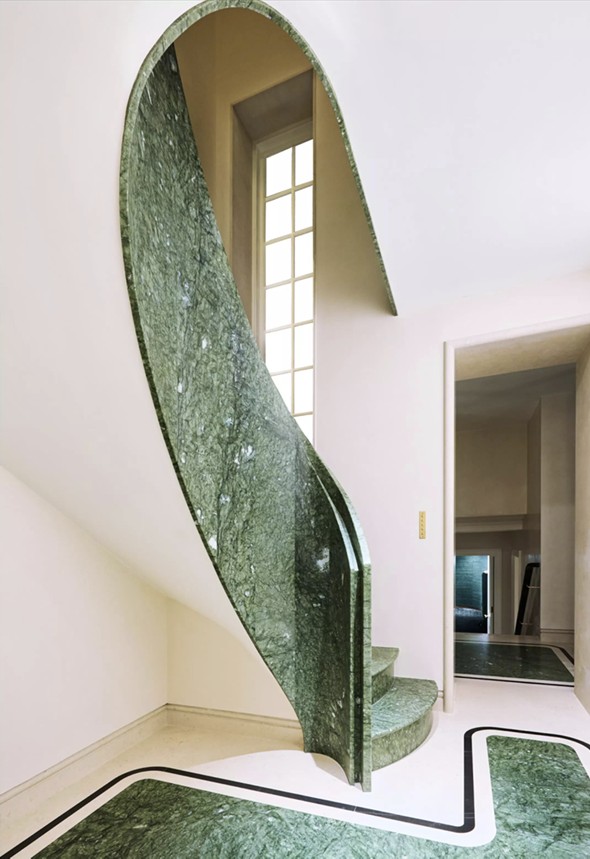
- Architectural: Columns, stairs, wall cladding, and ornamental sculptures.
- Finishes: Most commonly found in polished (high-gloss, reflective) or honed (matt, satin-like) finishes.
Categories: Internal, Marble, Marble Tiles, Natural Stone, Natural Stone Tiles, Products